As US blocks Strait of Hormuz, Navy prepares for showdowns
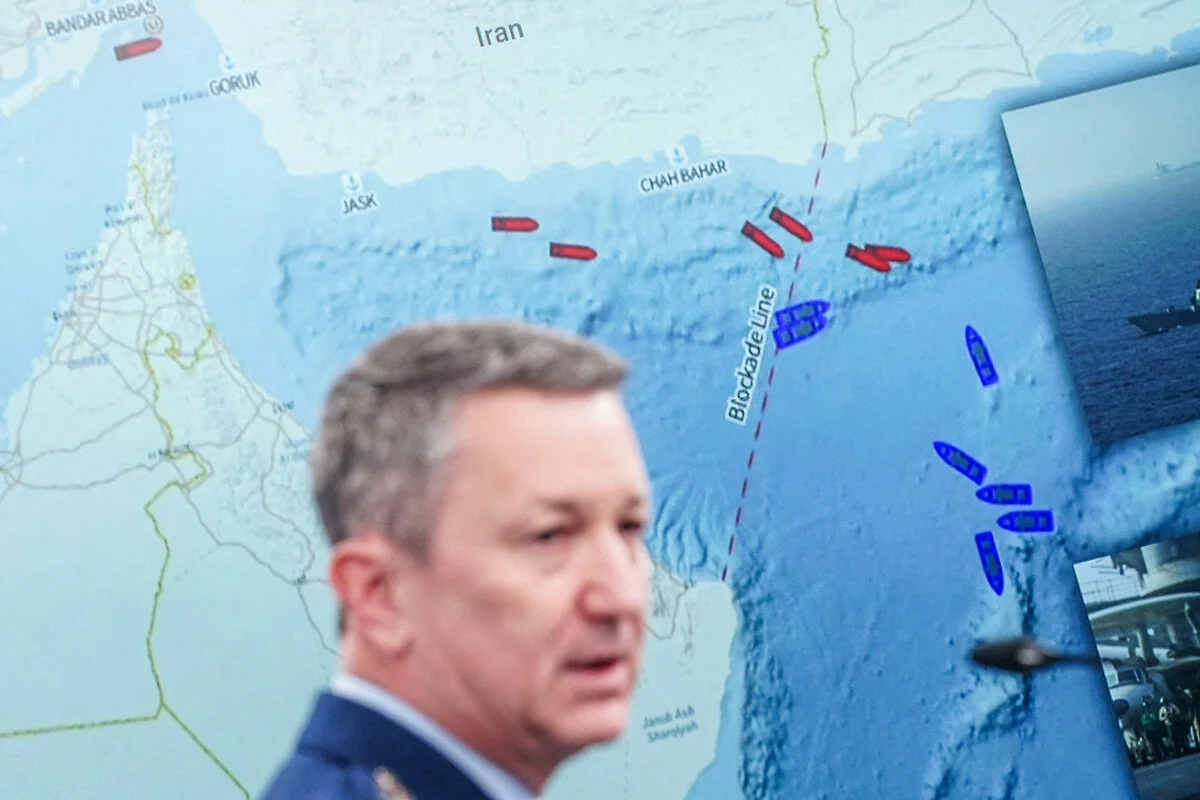

With its blockade of the Iranian coast now fully operational, the U.S. military is also dispatching the USS George H.W. Bush — accompanied by a Navy warship escort — to the Middle East, further reinforcing its presence in one of the world's most strategically sensitive waterways.
The carrier deployment adds roughly 6,000 more troops to the region, available either to strengthen the blockade or to respond to Iranian retaliation should Tehran follow through on its threats. Washington's objective is clear: squeeze Iran hard enough, fast enough, to bring its leadership to the negotiating table before a fragile two-week ceasefire expires next week.
"We can do this all day," Defense Secretary Pete Hegseth said at a press briefing Thursday.
Why We Wrote This
America's military has choked off shipping in the Strait of Hormuz, hoping to force Iran to negotiate. But the blockade could pose challenges for the U.S., further escalating tensions along the critical transit route.
Whether that confidence is warranted remains an open question.
In the meantime, U.S. sailors are operating under grueling conditions. The USS Gerald R. Ford — first diverted from the Mediterranean to the Caribbean in January to support the capture of former Venezuelan leader Nicolás Maduro, then redeployed to the Middle East in February — reached its 296th consecutive day at sea on Wednesday, setting a post-Vietnam War deployment record.
Ship traffic through the strait has dropped sharply since the blockade took effect Monday, yet the overall volume appears little changed, even as two U.S. Navy destroyers entered the waterway last week to begin mine-clearing operations.
The risks are asymmetric and dangerous in both directions. Adm. Daryl Caudle, chief of naval operations, warned Wednesday at an Atlantic Council discussion that military and commercial vessels may actually be more exposed to mines and Iranian strikes when exiting the strait than when entering it — a calculus that shipowners and their crews are unlikely to ignore.
Yet success brings its own complications. Should peace talks advance and vessel traffic recover, the Navy could find itself overwhelmed by the sheer pace of operations, says retired Navy officer Bryan McGrath, who once commanded one of the guided-missile destroyers now taking part in Operation Epic Fury.
So far, the Navy has not had to board any vessels, Gen. Dan Caine, chairman of the Joint Chiefs of Staff, said at a Pentagon briefing Thursday. But if that changes, the mission's complexity escalates considerably, Mr. McGrath warns.
One particularly fraught scenario: interdicting Chinese-flagged tankers carrying Iranian oil through the strait — a confrontation that could become even more volatile if those vessels were escorted by Chinese warships.
Throughout the operation, U.S. forces must also adhere to the strict rules of engagement and enforcement protocols rooted in centuries of maritime law and international treaty obligations governing naval blockades.
"This is a major undertaking," Admiral Caudle said Wednesday.
Strait moves and countermoves
Approximately 10,000 U.S. troops, a dozen warships, and more than 100 aircraft are currently participating in the Strait of Hormuz blockade, according to U.S. Central Command, which oversees American military operations across the Middle East.
On Tuesday, an Iranian-flagged cargo vessel attempted to circumvent the blockade but was intercepted. A U.S. guided-missile destroyer "successfully redirected the vessel, which is heading back to Iran," the command said.
No ships have managed to break through the blockade. Ten merchant vessels have complied with U.S. orders to turn around and return to Iranian ports along the Gulf of Oman, Central Command confirmed.
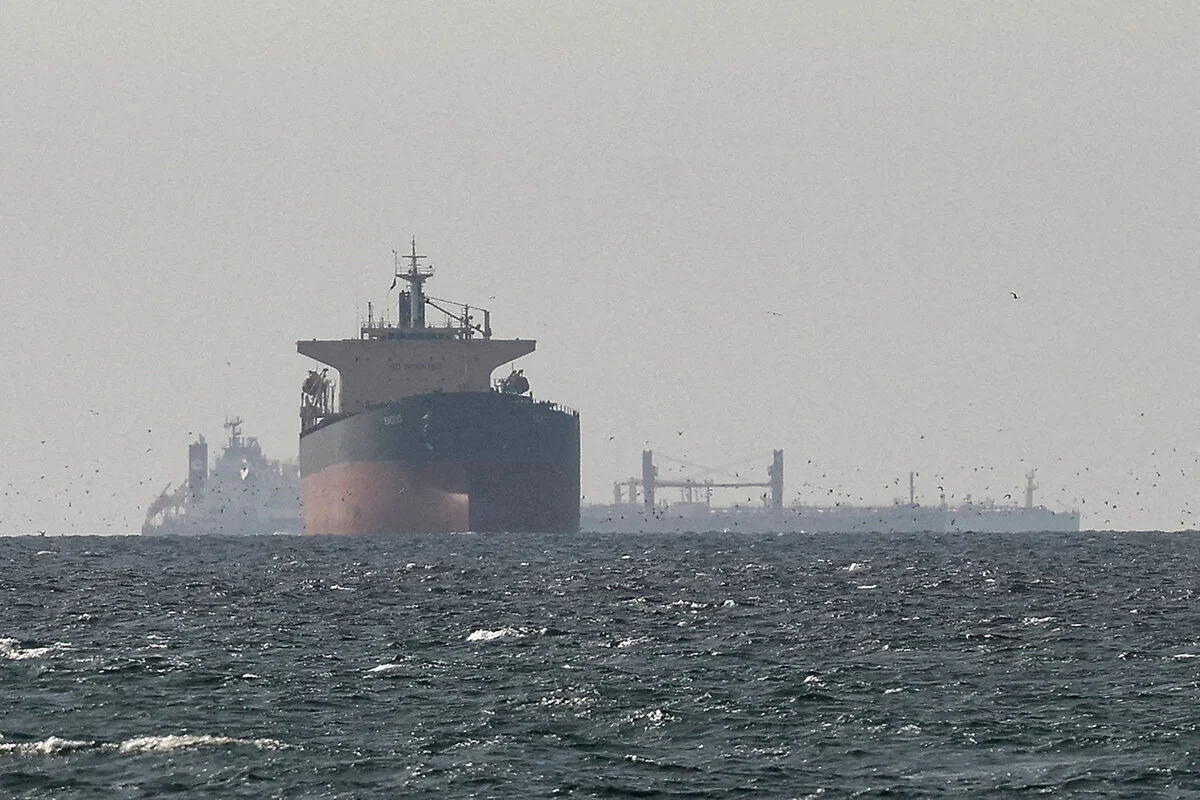
With most of its vessels pulled back from the Persian Gulf before the war began, the Navy is currently conducting interceptions and redirections in the Gulf of Oman — the body of water the Strait of Hormuz connects to the Persian Gulf.
At its narrowest, the strait spans roughly 20 miles, but its designated shipping lanes are far more constricted — just about two miles wide in each direction. That funneling effect makes transiting vessels sitting targets. Along Iran's rugged mountainous coastline, the Islamic Revolutionary Guard Corps is believed to have concealed weapons caches and speedboats inside man-made "wet tunnels" — assets that can be deployed both defensively and to threaten passing ships.
The U.S. Navy is not without countermeasures. Its surface fleet carries radar systems capable of detecting incoming missiles and drones, along with surface-to-air missiles and close-in weapons systems to neutralize them. The Navy has also begun deploying ship-launched helicopters armed with guns specifically designed to intercept enemy drones — tools Mr. McGrath describes as among "the best" available for defending against Iran's Shahed drones.
That capability was battle-tested during the Navy's sustained campaign against Iran-backed Houthi rebels in Yemen, who have targeted U.S. vessels 174 times since 2023 — giving American sailors hard-won experience in exactly the kind of threat environment they now face at the strait.
In what some analysts interpret as a direct response to this threat, the USS George H.W. Bush has altered its course eastward to the Arabian Sea — bypassing the Mediterranean and Red Seas entirely and instead rounding the coast of Africa. The detour is widely seen as an effort to sidestep Houthi attacks, which the group has continued to carry out in solidarity with Iran.
The strategic calculus facing the Navy's surface fleet is increasingly fraught. With missile stockpiles under strain and laser-based defensive systems — potentially effective against drone threats — still mired in development and technical problems, a 2024 Congressional Research Service report cautioned that the surface fleet may need to avoid operating within range of enemy drones and anti-ship missiles in the years ahead.
Meanwhile, Iranian missile strikes that severely damaged U.S. military installations across the Gulf region have raised serious doubts about the long-term viability of the Navy's Fifth Fleet headquarters in Bahrain, home to roughly 9,000 U.S. personnel.
Is it legal?
Iran has characterized the blockade as an act of war capable of unraveling the existing ceasefire agreement. But Raul Pedrozo, a professor of the law of armed conflict at the U.S. Naval War College, argues that the blockade has so far been conducted within the bounds of international maritime law.
Because the United States is engaged in an active armed conflict, it holds "the absolute right to stop every neutral vessel at sea to determine whether or not it's carrying contraband," Professor Pedrozo says — while adding that this authority must be "applied cautiously," to avoid accusations of disrupting legitimate neutral trade.
For a blockade to be considered lawful, it must also be enforced impartially — applied equally to vessels of both allied and adversarial nations. That requirement could create friction with China, since a flag state normally retains exclusive jurisdiction over its ships in peacetime. According to Professor Pedrozo, however, "that exclusive jurisdiction goes away during an international armed conflict" — a reality that "definitely could strain relationships with other countries."
Beijing has already weighed in, with the Chinese foreign ministry condemning the U.S. blockade as "dangerous and irresponsible."
One scenario analysts are watching: China could deploy its own naval warships to escort Chinese-flagged vessels through the blockade zone — a calculated provocation, according to Bryan Clark of the Hudson Institute. "The U.S. probably won't shoot on any of these ships," Clark notes, adding that doing so would mean "attacking a third party just for trying to escort its oil out."
The likely outcome, he suggests, would hand Beijing a low-risk diplomatic victory. "It's a way of embarrassing the U.S. that could be really beneficial for China."