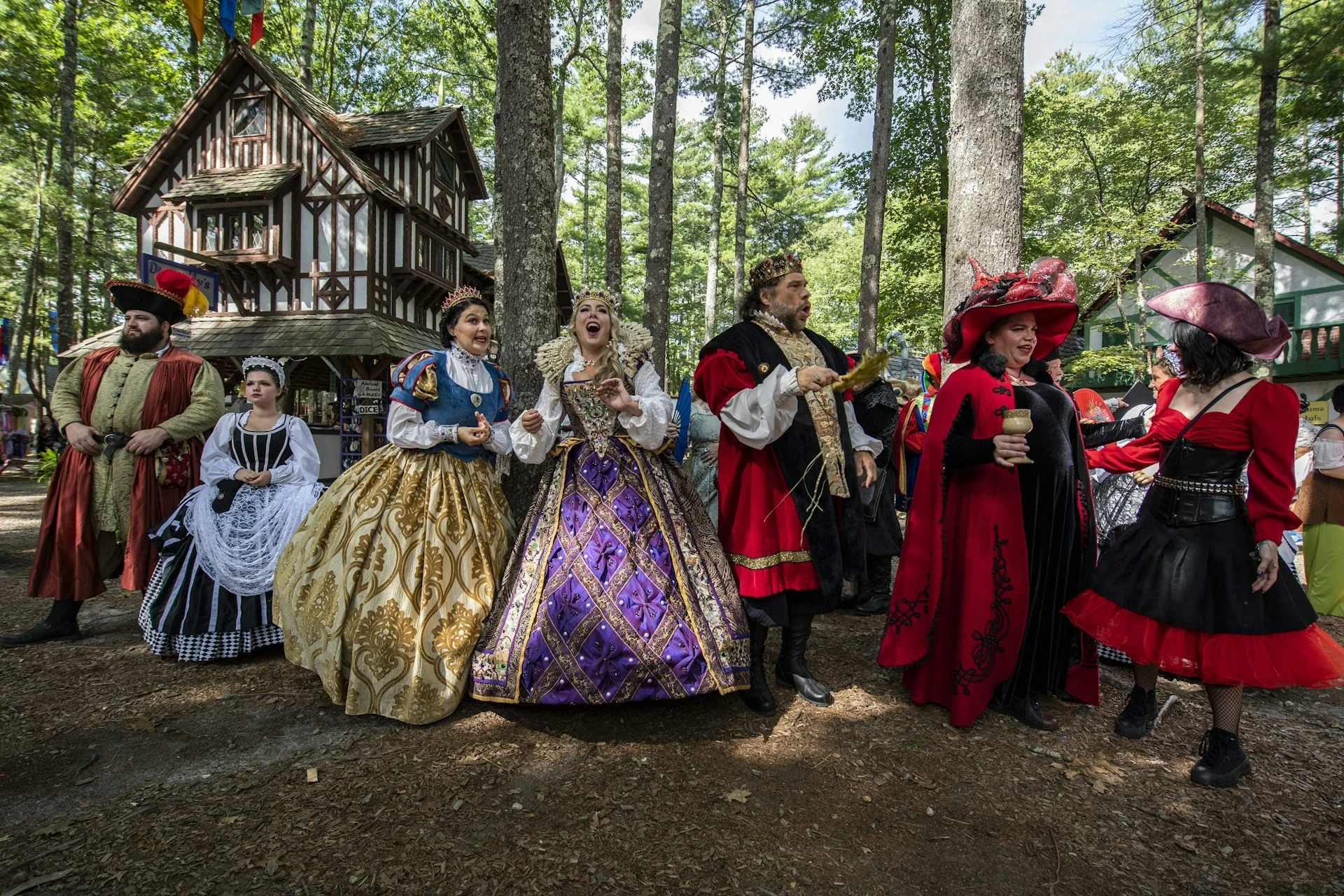
Seconds after stepping through the gates of the Newport Renaissance Faire, a cluster of fairies materializes around you. They press a scroll into your hands and deliver their instructions: "You must seek out the Bone Man for the first hurdle in your quest." The fair is thick with men dressed in bones — vendors, fellow attendees, wandering performers — but only one is the right Bone Man: an actor wearing what appears to be a mask fashioned from a human skull, topped with a crown of deer antlers. He stamps your scroll and dispatches you to your next quarry: the Drunk Viking.
Following the chain of directions passed between actors, you drift through a pageant of performers drawn from historical eras and fantastical realms, brushing past merchants hawking wares and merrymakers reveling in the spectacle. It's a deliberately engineered immersion, one designed to knit together guests and staff into a shared fiction — even as many of those costumed staff members, speaking in faux Middle English, are quietly angling to sell you something.
Renaissance fairs were originally conceived as a creative refuge for artists pushed out by political repression during the Red Scare. Today, they occupy an uneasy position between countercultural expression and commercial enterprise. Having matured into a nationwide industry complete with tiered ticketing, branded merchandise and multimillion-dollar valuations, the modern fair can look less like a radical art experiment and more like a themed corporate attraction.
As cultural geographers, we set out to examine whether the animating spirit of the fairs has shifted over the decades. For our recent study, we attended the Tennessee Renaissance Festival, Newport Renaissance Faire, Tennessee Medieval Faire and the Tennessee Pirate Fest.
Once upon a time … not so long ago
For all the medieval pageantry, the renaissance fair is a surprisingly recent invention. The first formally recognized event took place in May 1963 in Irwindale, California, conceived by a public school English and history teacher named Phyllis Patterson, who called it the Renaissance Pleasure Faire.
For Patterson, the fair was a vehicle for the era's countercultural values — free expression, identity experimentation and creative play. It also served a practical purpose: providing income for actors, writers and set designers who had been blacklisted or graylisted as suspected communists and effectively frozen out of the film and entertainment industries.
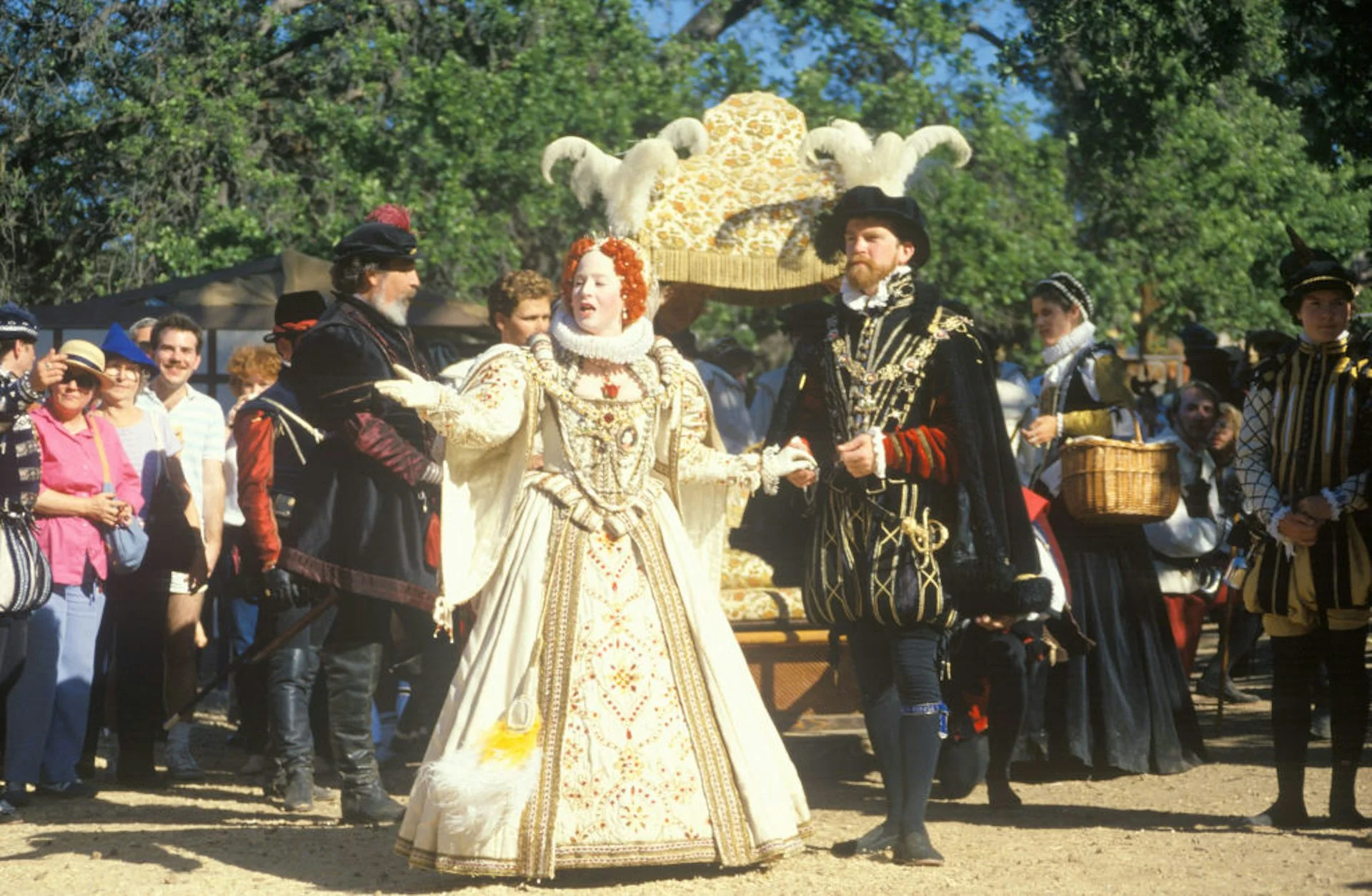
Patterson herself had refused to sign a Cold War–era loyalty oath required of California public school employees. The Faire became an alternative stage — a place where actors, educators and designers could keep their crafts alive through costuming, character work, performance and writing.
From creative refuge to thriving business
Since those early gatherings in Southern California, renaissance fairs have spread across the country. Many have built permanent infrastructure — stages, jousting pitches, entire mock villages — despite operating only seasonally, in spring or fall. Built to resemble small villages, these self-contained fantasy lands invite visitors to briefly step outside their daily routines and inhabit a world apart.
That appeal shows no sign of fading. The East Tennessee Renaissance Faire recently announced a relocation after attendance at its Newport venue ballooned from 600 to 6,000 visitors over just three years, forcing a move to a larger site in neighboring Sevierville. Meanwhile, new events continue to emerge: the Chattanooga Renaissance Faire is set to debut in spring 2026.
Entry fees have become standard — US$38 at the Tennessee Renaissance Festival, $53 at the Renaissance Pleasure Faire — with many events also offering season passes.
Attendees routinely arrive in costume, though strict adherence to any particular historical period is neither expected nor enforced. Tolkien-style elves stroll alongside Tudor courtiers; Viking warriors share the grounds with fairies and pirates. Many fairs have developed themed weekends — "Viking Victory," "Fantasy and Folklore," "Pirate Plunder," "Celtic Celebration" — that blend history and invention with deliberate looseness. Committed participants often greet one another in cheerful mock-medieval vernacular: "my lady," "my lord."
Vendors, many in costume themselves, hawk an eclectic range of goods, from cloaks, swords and crowns to contemporary jewelry and specialty shampoos. Food stalls offer era-adjacent fare such as Scotch eggs, ciders, mead and turkey legs, alongside modern cocktails with names like "The Shipwreck" and "The Blueberry Faerie" — priced at roughly stadium and arena concession levels.
The phenomenon has even crossed borders, with events taking root in Germany and France, reconnecting these festivals with the very history they invoke. The emergence of pirate- and steampunk-themed offshoots further underscores the commercial momentum — one that would have been unimaginable in the scrappy early days of Phyllis Patterson's faire.
But as with many ventures, the prospect of profit comes with complications.
The 2024 HBO Max docuseries "Ren Faire" pulled back the curtain on the Texas Renaissance Festival in Todd Mission — the largest in the country — exposing an inheritance dispute that spiraled into lawsuits and, ultimately, a court-ordered $60 million sale of the event's property and assets.
King Richard's Faire in Carver, Massachusetts — the largest fair in New England — reportedly generates substantial daily revenue while allegedly relying on widespread worker misclassification, leaving many performers earning below minimum wage without benefits. Volunteer "villagers" work solely for free admission, and neither workers nor paying guests receive compensation or refunds when the fair closes for rain.
Seeking out a space of whimsy
Despite the encroachment of profit motives, our research led us to a clear conclusion: renaissance fairs have always been, at their core, about community — and they still are.
Dressing as a fantastical version of yourself or a beloved character creates an immediate bond with others who have done the same. Unlike Civil War or World War II reenactments, where historical accuracy is rigorously enforced, renaissance fairs invite participants into a shared, openly mythologized version of the past — one built on performance, costume and play rather than strict fidelity to the historical record.
At the Tennessee Renaissance Festival, for instance, jousts are held each weekend at a permanent pitch at the back of the grounds. Knights representing rival noble houses charge at one another while announcers whip the bleachers into chants and cheers, each section assigned a champion to root for. The knights invoke historical-sounding lineages, but the assembled cast is a deliberate anachronism — one that pointedly includes women and people from ethnic groups who would never have shared a medieval jousting pitch.
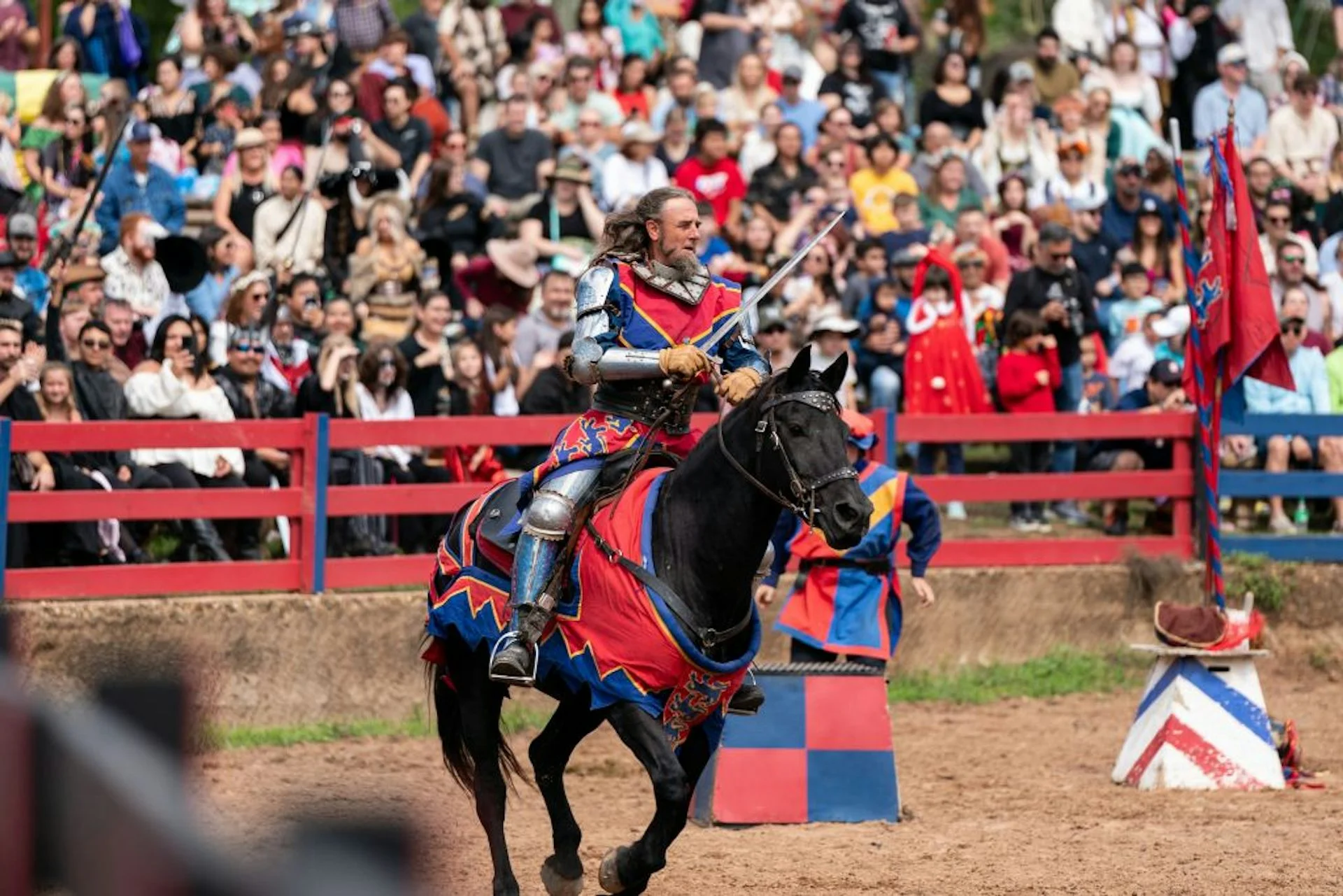
Historical fidelity is beside the point — and insisting on it would likely ruin the fun.
Beyond the jousting pitch, you might encounter a queen presiding over a game of human chess, a rotating roster of musicians, comedians, jugglers and fire-breathers, pixies teaching children to build fairy homes, or a mermaid holding court in her magical grotto.
There is also a deliberate simplicity to the moral universe of these events. Ladies are gentle and beautiful; men are brave and noble. Villains are easy to identify — and they always lose.
In an era defined by political turbulence, information overload, invisible surveillance and villains who are anything but easy to spot, the faire's uncomplicated prism of good and evil can feel like genuine relief — a curated cultural experiment that doubles as an improvised escape.
Renaissance fairs, in the end, wield a quiet power: they build communities by deliberately blurring fantasy, history and everyday life. Vendors, performers and visitors alike can spend a day as Tudors, Vikings, hobbits, elves or mermaids. Almost no one actually believes in elves, or imagines their mock-Elizabethan speech is anything more than cheerful, mangled guesswork.
And that's precisely the point. There is genuine joy in pretending — and a near-universal pleasure in the weird, the whimsical and the absurd.

The authors do not work for, consult, own shares in or receive funding from any company or organization that would benefit from this article, and have disclosed no relevant affiliations beyond their academic appointment.