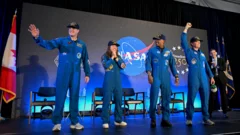
When the Artemis II mission launched in early April 2026, it drew millions of viewers worldwide. The crew's courage, skill, and unmistakable sense of wonder offered a vivid reminder of what human persistence and technological ambition can achieve — framed against the vast, indifferent backdrop of space.
For those of us watching from Earth, that mission came alive largely through images — remarkable photographs captured by the astronauts themselves. More than documentation, those pictures forged an authentic emotional connection that no automated system could replicate.
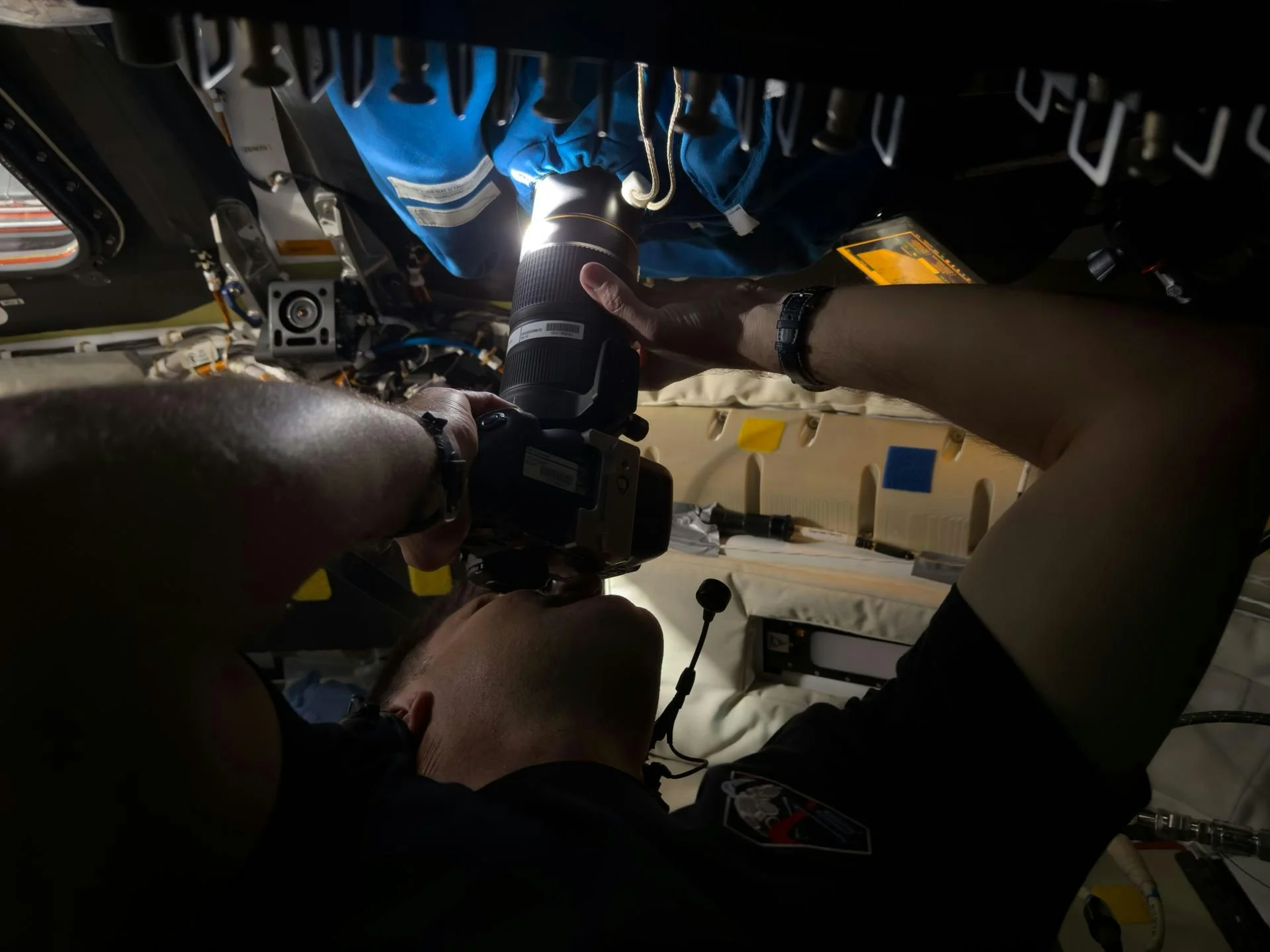
As a photographer and director of the Rochester Institute of Technology's School of Photographic Arts and Sciences, I've been struck by how central these images have become to the public's shared experience of the mission. In a media environment saturated with AI-generated visuals, NASA's deliberate investment in training astronauts to photograph has placed meaning above convenience — and human perspective above algorithmic prediction.
Capturing space from the crew's perspective
Photography was hardly a top priority during the Apollo era. Astronauts picked up a camera only when their primary tasks were done. Yet the images they did capture changed everything.

Photographs like "Earthrise" and "The Blue Marble" are widely credited with helping ignite the modern environmental movement. That public response prompted NASA to rethink its approach entirely, eventually committing to formally training astronauts in photographic technique — not as an afterthought, but as a mission priority.
The Artemis II photographs have cut through the flood of AI-generated imagery now crowding social media. NASA's releases of the crew's photos accumulated thousands of shares and comments — a level of engagement that speaks to something deeper than novelty. These images resonate because they are the product of human beings who were actually there, interpreting what they saw through the lens of their own experience.

Human perspective versus AI tools
Photography has long embraced AI-powered tools — for processing raw files, refining color data, driving autofocus, and guiding post-production edits. Used well, these tools amplify what human photographers are trying to say.
But AI is also increasingly capable of operating autonomously — running machinery independently, steering everything from cars and drones to surgical cameras. And it can generate photorealistic images and video from a simple text prompt.
AI systems are trained on millions of sample images, learning to recognize patterns and then predict the most statistically plausible version of a "successful" photograph. The result can be visually convincing — but it is fundamentally an extrapolation from existing data, not an act of witness.
Human photography, by contrast, is rooted in direct observation, intention, and lived experience. The photographer is present. They feel the weight of the moment. Their choices — what to include, what to leave out, how to frame the shot — are acts of interpretation, not prediction. That is where emotional power comes from.
Every Artemis II photograph reflects this distinction. The exposure settings, lens selection, framing, and timing were all decisions made by a human astronaut drawing on their own perspective and skill in a specific, unrepeatable moment. No two images are alike. That individuality is not incidental — it is the source of the images' narrative authority.

Images that tell a story
Every photographer decides what the frame will contain — and that decision shapes meaning. In the Artemis II "Earthset" photograph, the juxtaposition is deliberate and striking: the Moon's rough, monochromatic surface fills the foreground, while a thin sliver of Earth glows beyond it. The choice to hold both objects in a single frame is not accidental. It invites comparison — and suggests a story. The Moon's barrenness set against Earth's fragile luminance reads as an implicit contrast between absence and life.
A second photograph shows the nightside of Earth in its entirety, with the Sun's corona glowing along its edge, auroras shimmering across the upper atmosphere, and city lights dotting the surface below. Crucially, the lower left corner of the frame shows the edge of the Orion capsule's window. That detail — easily cropped out — was kept in. It anchors the image in reality, reminding us that a human being was inside that capsule, hurtling through space, and chose to include their own vantage point in the shot.
Both photographs echo the legacy of Earthrise and the Blue Marble — images that have held their place in global consciousness for more than half a century. The Artemis II crew's photographs belong to that same lineage: historic moments rendered meaningful by the human eyes and hands that captured them. They carry not just information, but awe — and in doing so, they affirm what photography at its best has always done: connect us to experiences beyond our own.

Christye Sisson has received funding from the US government for research in media forensics.