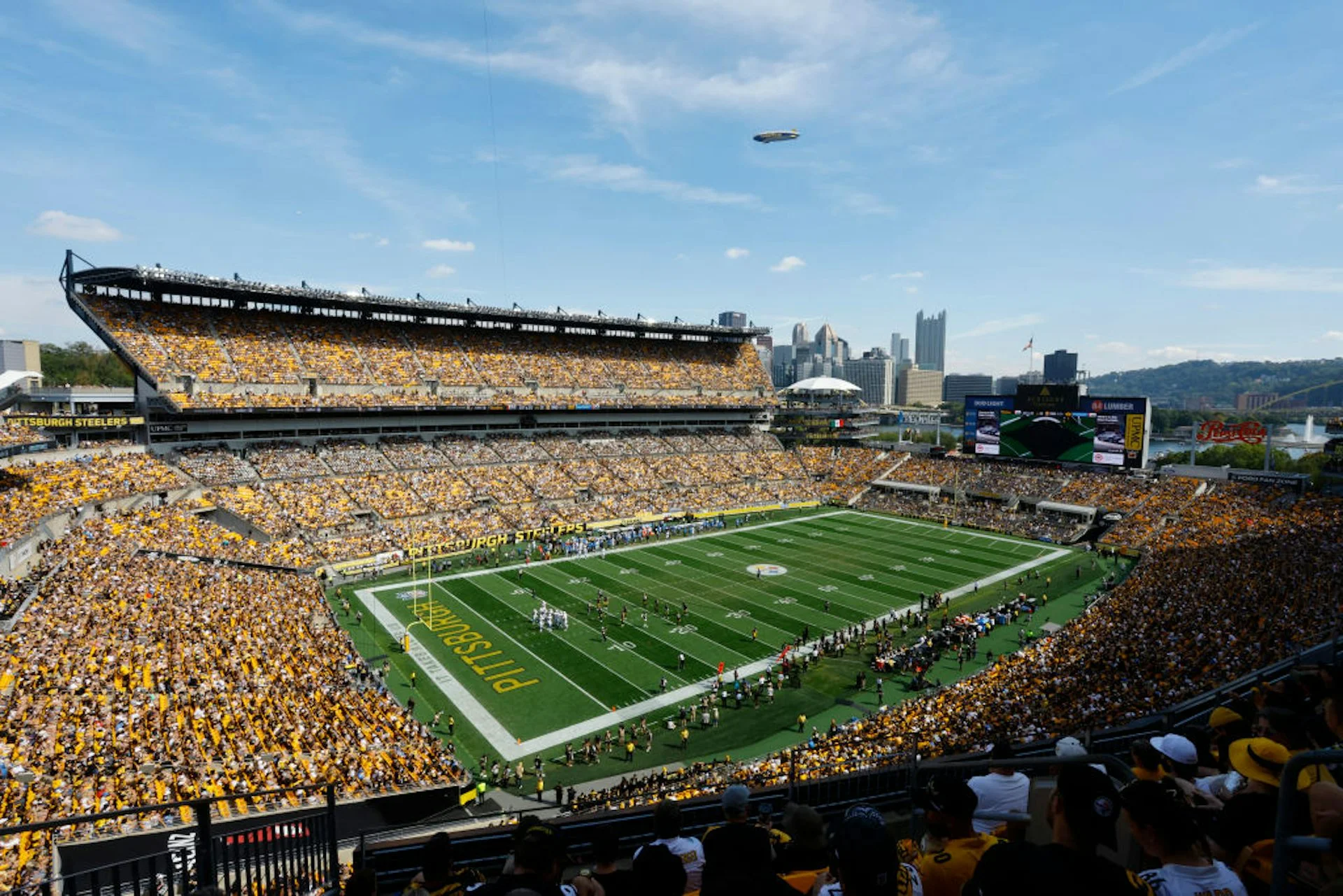
When the NFL draft touches down in Pittsburgh in April 2026, city officials will almost certainly roll out eye-catching economic impact projections. Expect references to the $73 million Green Bay, Wisconsin generated in 2025, the $213 million Detroit claimed in 2024, or the $164 million Kansas City reported the year before that.
As a sports marketing researcher who specializes in the economics of celebrity endorsements, I treat those short-term figures with considerable skepticism.
For one, local residents frequently stay away from mega-events to avoid the crowds. Economists have long documented the "displacement effect" — the phenomenon whereby an influx of visiting fans simply crowds out regular tourism and routine local spending, substituting existing economic activity rather than genuinely adding to it.
If Pittsburgh measures the draft's success purely by hotel occupancy and weekend bar tabs, it will have missed the bigger picture. Because the draft rotates among cities each year, the real return on investment isn't a temporary revenue spike — it's brand equity: the lasting increase in a city's market value and national reputation.
The power of institutional endorsement
For three days, the NFL will function as a high-profile celebrity endorser for Pittsburgh. Because attention is a scarce and valuable commodity, that institutional endorsement can be worth far more than any immediate cash infusion.
Marketing researchers study the signaling power of endorsements closely. In this context, "signaling" describes the shift from Pittsburgh saying, "Trust us, we're great," to a massive global brand like the NFL declaring, "We trust them — and so should you."
My own research into the golf industry illustrates just how potent this dynamic can be. I quantified the impact of Tiger Woods' endorsement on Nike golf ball sales: after Woods switched from Titleist, Nike moved an additional 119 million golf balls over a decade, adding $105 million to its bottom line. That endorsement functioned as a market-wide signal of quality and legitimacy — one that also supported a 2.5% price premium. As research confirms, a higher price itself reinforces the perception of product quality.
The NFL draft operates in precisely the same way for its host cities.
By choosing Pittsburgh, the NFL broadcasts a signal that the city is a world-class destination capable of executing on a global stage. That carries particular weight for Pittsburgh, which — despite decades of genuine transformation into a thriving hub for robotics, health care and higher education — still struggles to shed its 20th-century Rust Belt image in the national imagination.
Detroit understood this calculus in 2024. The city didn't simply host a party; it used the draft as a platform to aggressively push back against persistent narratives of urban decline and to spotlight its ongoing civic reinvestment.

The broadcast imagery of a vibrant, packed downtown Detroit did more to modernize the city's image than any taxpayer-funded advertising campaign realistically could. Kansas City experienced a similar lift: in the year following its 2023 draft, the city added nearly 25,000 new residents — a higher single-year total than in any of the four preceding years.
How the draft could reshape college recruiting
Hosting the NFL draft may also deliver a meaningful boost to recruitment at Pittsburgh-area universities.
In recent years, I've studied how name, image and likeness policies — widely known as NIL — are reshaping talent acquisition in college football. In the NIL era, universities aren't just selling an education; they're selling a credible pathway to professional success.
I expect the draft to generate a meaningful "halo effect" for regional programs like the University of Pittsburgh, Penn State and West Virginia. A halo effect occurs when the prestige of a high-profile endorsement spills over to elevate associated brands. For elite high school recruits watching the draft, seeing the gateway to the NFL physically situated in Pittsburgh anchors the idea that the region sits at the center of the football universe — at least for those three days.
Viewers will see this dynamic play out in real time. When ESPN broadcasts from Pittsburgh's North Shore, it won't only discuss Penn State quarterback Drew Allar's arm talent — it will show highlights of him developing his game just two hours to the east.

The University of Pittsburgh itself could see an even more direct impact. The recent emergence of linebacker Kyle Louis and running back Desmond Reid as NFL prospects reinforces an established Pitt-to-pro pipeline. In a hypercompetitive recruiting environment where virtually every major program now offers financial compensation, non-monetary differentiation matters enormously. Being located in a city the NFL has chosen sends a clear signal: you're already in the league's orbit.
Of course, mega-events carry real risks. If logistics falter, traffic becomes gridlocked or the fan experience disappoints, the endorsement effect reverses. The brand signal flips from "premier destination" to "not ready for prime time" — fast.
In landing the NFL draft, Pittsburgh has essentially secured a three-day commercial that will reach tens of millions of Americans. Now it simply has to make sure the set looks the part.

Tim Derdenger does not work for, consult, own shares in or receive funding from any company or organization that would benefit from this article, and has disclosed no relevant affiliations beyond their academic appointment.