The day I was laid off from the Kennedy Center, I felt a kinship with Dolley Madison rescuing Gilbert Stuart's portrait of Washington before British forces torched the capital. As the staffer responsible for the building's artworks, I faced a similar urgency. The key difference: unlike the White House in 1814, my institution had been burning from within for months.
A year passed between President Trump's takeover of the Kennedy Center in early 2025 and his February announcement that he would shutter the nation's cultural center for two years. That period brought artist cancellations, dwindling audiences, staff purges and replacements—plenty of drama, just none of it onstage. Trump set the closure date for July 4, the country's 250th birthday, the very occasion I'd been hired to help commemorate as the institution's first curator of visual arts and special programming.
Despite assurances that staff would remain employed through July, I was among dozens terminated on March 26. The moment I received that HR meeting invitation, I knew I had to move fast. Weeks earlier, Kennedy Center president Richard Grenell had instructed me to "get rid of everything" in the permanent collection, saying we needed entirely new art for the reopening. I'd stalled by claiming I was waiting on input from another colleague, but now I had two hours to wrap up. I fired off urgent emails to the families of the late maestro Julius Rudel, the center's first artistic director, whose bust stands outside the Opera House, and of the late Nehemia Azaz, whose carved wood installation depicting 43 instruments from the Hebrew Bible adorns the historic Israeli Lounge. Both families had been anxious about the impending closure, and I had to tell them I could no longer provide updates about their loved ones' artworks. (A Kennedy Center spokesperson says the institution is inventorying all artwork as part of closure preparations.) I packed my belongings that day, though my exit was more dignified than a development office colleague's—she'd been fired mid-tour while showing donors around.
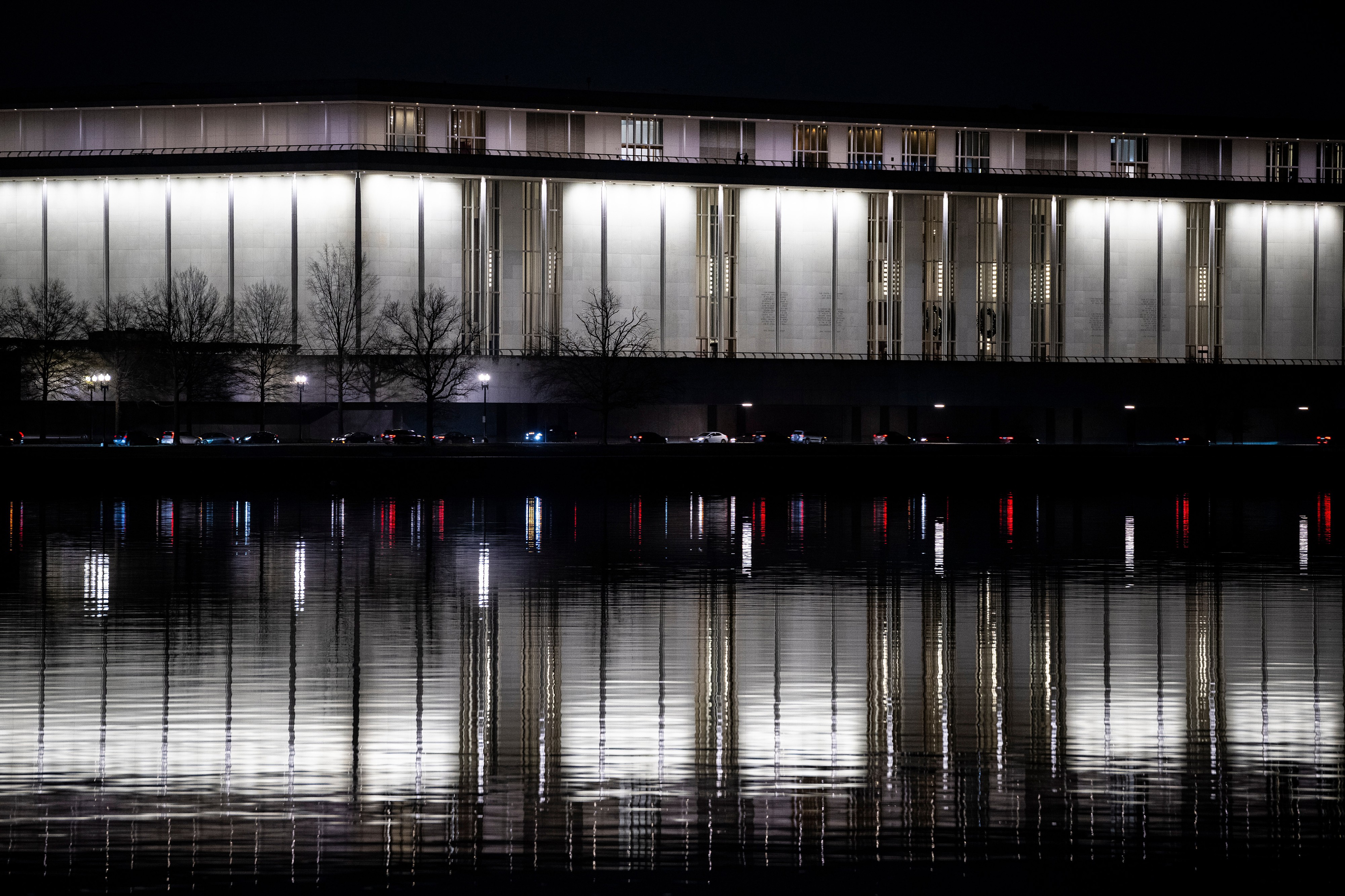
The official justification for closing the Kennedy Center is renovation to make it—in Trump's words and capitalization—"the finest Performing Arts Facility of its kind, anywhere in the World." For months, colleagues and I had heard shutdown rumors, but we suspected the real reason wasn't just structural problems (which existed but could have been addressed incrementally, without closing the entire complex). Rather, a year of chaos had left the organization barely functional artistically and financially. Trump had arrived promising that "for the Kennedy Center, THE BEST IS YET TO COME!" Inside, my colleagues and I witnessed cronyism, incompetence, and a cascade of bizarre decisions that would ultimately darken the Kennedy Center.
Last April, after reading how Grenell was personally responding—if combatively—to artists who contacted him, I emailed him about a public art project I'd been developing with a major nonprofit for America's semiquincentennial: a series of temporary installations on the National Mall, each exploring a Stoic virtue. The private foundation funding my project had pulled out after the 2024 election, reassessing its priorities like much of the philanthropic world. Would the Kennedy Center be interested?
One of Grenell's deputies contacted me. Not only did Grenell want my project in the center's America 250 programming, he wanted me on staff to build a visual arts program that would give visitors something to experience between performances.
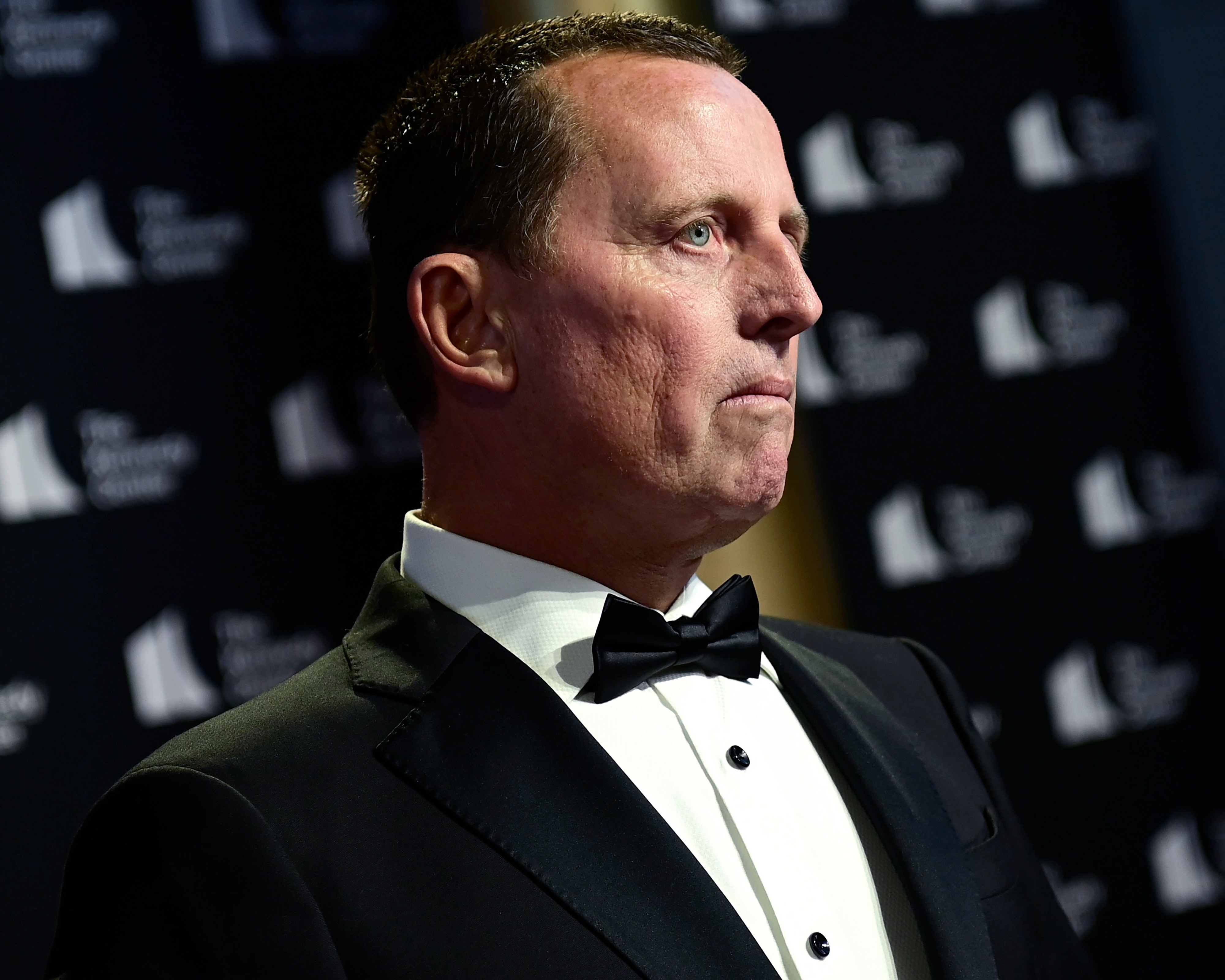
I hesitated. For Washington's arts community, the Kennedy Center takeover felt like an attack—the old leadership had been ousted, and Grenell had installed his own people, many with ties to Trump and Republican politics. Numerous artists, including Issa Rae and Lin-Manuel Miranda, had cut ties with the center, often citing Trump's politicization of an institution meant to welcome everyone.
I disclosed to my prospective employers that I'd never voted for Trump. They said it wasn't a problem. I also raised concerns about political interference, which I'd witnessed firsthand while serving on D.C.'s arts commission. After being told my personal politics wouldn't disqualify me—that it was actually preferable the Kennedy Center's new hires not all be MAGA loyalists—I said I'd need complete creative control over my exhibitions and programming. The deputy assured me there would be no interference.
Ultimately, I decided the Kennedy Center mattered too much to abandon. It's one of our most prominent venues for presenting national cultural identity to the world, and participating in that mission was an opportunity I couldn't pass up. I genuinely believed I could develop broadly appealing programs centered on themes of collective identity, set against a historic national milestone. While I sympathized with those boycotting, simply attacking the institution for the sake of appearances struck me as wrong for anyone who truly cared about the arts. And if I was ever asked to do something unconscionable, I told myself, I'd quit. Maybe I was naive, but as critics likened the institution to a burning building, I resolved to run toward the flames, Dolley-style, to save what I could. Perhaps I could create something for the Kennedy Center that would outlast this moment.
Most of my friends in the city's arts community were surprised. But after I explained my thinking, they mostly expressed cautious hope. The exception was a close friend who called me the equivalent of a Nazi collaborator. You can't please everyone.
I was eager to start and began developing three exhibitions, each exploring a revolution in American artistic production with global impact: one on trailblazing musicians, another on street art's legacy, and a third showcasing American artists working with artificial intelligence, robotics, and augmented reality. None of these exhibitions materialized, because I couldn't get anyone on the executive team to allocate institutional resources or funding.
I quickly noticed things getting strange. It was understood among staff that the new leadership's fundraising strategy centered on emphasizing the center's association with President Trump. They organized a fundraiser for a preview of Les Misérables, where $2 million bought a box seat and access to a private reception with the president. "We are grafting political management principles into a nonpolitical organization," one colleague, a Republican campaign veteran, told me. The center had clearly alienated many longtime donors—some of them former board members Trump had removed—and a new class of benefactors suited to Trump's Washington had to be cultivated.
A troubling sign emerged when the Kennedy Center abruptly decided to sell sponsorships of its historic lounges—spaces that have been integral to the institution since it opened in 1971. That year, the Israeli government paid for the decoration of one room as a gift to the American people, honoring President John F. Kennedy and celebrating the bond between Judaism and music. The Israeli Lounge joined other culturally significant spaces—the Chinese Lounge, the Circles Lounge (renamed from the Russian Lounge after the 2022 invasion of Ukraine), and the African Room—as venues for receptions and private dinners. These spaces have long reinforced the Kennedy Center's mission as a hub for cultural diplomacy.
Last fall, I curated an exhibition in the Israeli Lounge marking the anniversary of the October 7 Hamas attacks, featuring paintings by an American Israeli artist. At the opening reception, Grenell issued a stark warning to the predominantly Jewish audience: unless donors stepped forward to sponsor the space and cover renovation costs, the lounge would be handed over to a new benefactor. "It certainly would be a shame if we lost this room to a corporation or an individual and it was no longer the [Israeli] lounge," he said. Delivering such an aggressive fundraising pitch at an event commemorating a pogrom felt deeply inappropriate to many attendees. I was mortified.
The renaming decisions that followed raised further questions. The Circles Lounge—previously reserved for donors meeting a specific annual giving threshold—became the SyberJet Lounge, named for an aircraft manufacturer whose CEO had been convicted of defrauding investors before receiving a pardon from Trump in March 2025. According to The Wall Street Journal, the CEO paid "millions" for the naming rights. The African Room underwent an even stranger transformation, with a plaque now reading A Tribute to America's Intelligence Community. The named donor for this redesignation was Gaurav Srivastava, whom the Journal profiled last year as "part Austin Powers, part James Bond"—someone who allegedly fabricated claims about CIA service and embodied how "money and moxie can access Washington's most influential people." (A lawyer for Srivastava told the Journal his client "never participated in any blackmail, fraud, threats, or extortion.")
The artifacts removed from the African Room were irreplaceable: handmade textiles from across the continent, a wooden sculpture donated by Ghana to symbolize African grief over President Kennedy's assassination, and a pair of doors carved from 700-year-old wood depicting Yoruban village scenes. No one informed me of their fate. A current Kennedy Center staffer told The Atlantic the items are now stored in the building's archives. (A spokesperson said this was to "ensure safekeeping" during construction.) The empty room adjacent to the center's permanent exhibition on President Kennedy and the arts represented valuable real estate. When I submitted a memo proposing we convert it into a dedicated gallery for the new visual-arts program, an executive team member instead suggested selling it as a lounge and compiled a list of Middle Eastern and Central Asian nations to approach. The center did secure donations from Kazakhstan and other countries, but according to the staffer, that space remains vacant.
During the 10 months I worked at the Kennedy Center, Grenell never convened an all-staff meeting—a fact widely discussed among employees, though the Kennedy Center now disputes this. He appeared more invested in feuding with Katie Couric on Instagram than in fulfilling his leadership responsibilities. Much of his time went to attacking critics on social media, politicizing an institution meant to remain apolitical while accusing others of the same behavior. ("You sound vaccinated," he once replied to a critic in the comments beneath the Kennedy Center's Instagram post promoting The Sound of Music.)
Although Grenell imposed a return-to-office mandate upon his appointment, the policy didn't extend to him or his inner circle. Colleagues reported that meeting requests with Grenell were routinely denied or ignored. When I asked his scheduler in mid-August about scheduling a discussion of my projects, I was told he would be out of the office for several weeks. His whereabouts were no mystery—a yacht off the Croatian coast, then California—because he documented it on Instagram. (A Kennedy Center spokesperson now denies this.) His Balkan trip wasn't purely recreational; in Montenegro, he met with the pro-Russian former president of Republika Srpska and government officials in Albania. In November, The New York Times reported that Trump was circumventing Grenell, conducting nearly weekly phone calls with the center's facilities manager (who eventually succeeded Grenell as the institution's head).
Grenell, who simultaneously served as Trump's special presidential envoy for special missions, appeared to conflate his dual roles with his other pursuits. A colleague once mentioned spotting documents related to Venezuela (where he had been conducting contentious negotiations with the government in his envoy capacity) on office printers. One of Grenell's top lieutenants texted me about an artist whose work Grenell owned, asking if we could "do something with him." Exhibiting that artist's work could have inflated their auction prices and financially benefited Grenell—a potential ethical violation. I didn't respond.
Grenell—a former ambassador to Germany who arrived at the Kennedy Center without arts experience—reportedly aspired to become Trump's secretary of state. Several of his appointments were similarly ill-suited, including Lisa Dale, the chief fundraising officer and a friend of Trump ally Kari Lake. She was rarely seen in the office except during weeks with red-carpet events. In conversations, she admitted unfamiliarity with basic arts terminology: permanent collection, performance art, and emeritus (as in "emeritus trustees")—concepts any senior leader at a major cultural institution should understand. Other top hires included Republican political operatives without arts backgrounds, such as the spouse of a Republican National Committee leader whose most extensive professional experience was as a marketing and events manager at a Toyota dealership in Ireland. Experienced staff across every department departed under Grenell's tenure, with the exodus accelerating until it culminated in the entire Washington National Opera leaving, along with the executive director of the National Symphony Orchestra, which now faces the challenge of finding a temporary home for two years. (Grenell did not respond to repeated requests to speak with The Atlantic's fact checkers for this story.)
The atmosphere often resembled Shear Madness, the theatrical farce that has run at the Kennedy Center since 1987. Trump's surprise announcement that the FIFA World Cup Final Draw would be held at the center—the same weekend as the Kennedy Center Honors—forced the cancellation and relocation of scheduled concerts and performances. On Honors night, heightened security measures required guests to arrive early and wait in the Grand Foyer for roughly an hour before the program started. With no bars open, the scene descended into chaos: elderly attendees begged for water while women in evening gowns argued with catering staff over cans of Diet Coke. Inside the theater, senior staff and their guests filled premium seats typically reserved for major donors. "Peter Gelb at each gala sits in back row," one colleague remarked, referencing the Metropolitan Opera's general manager.
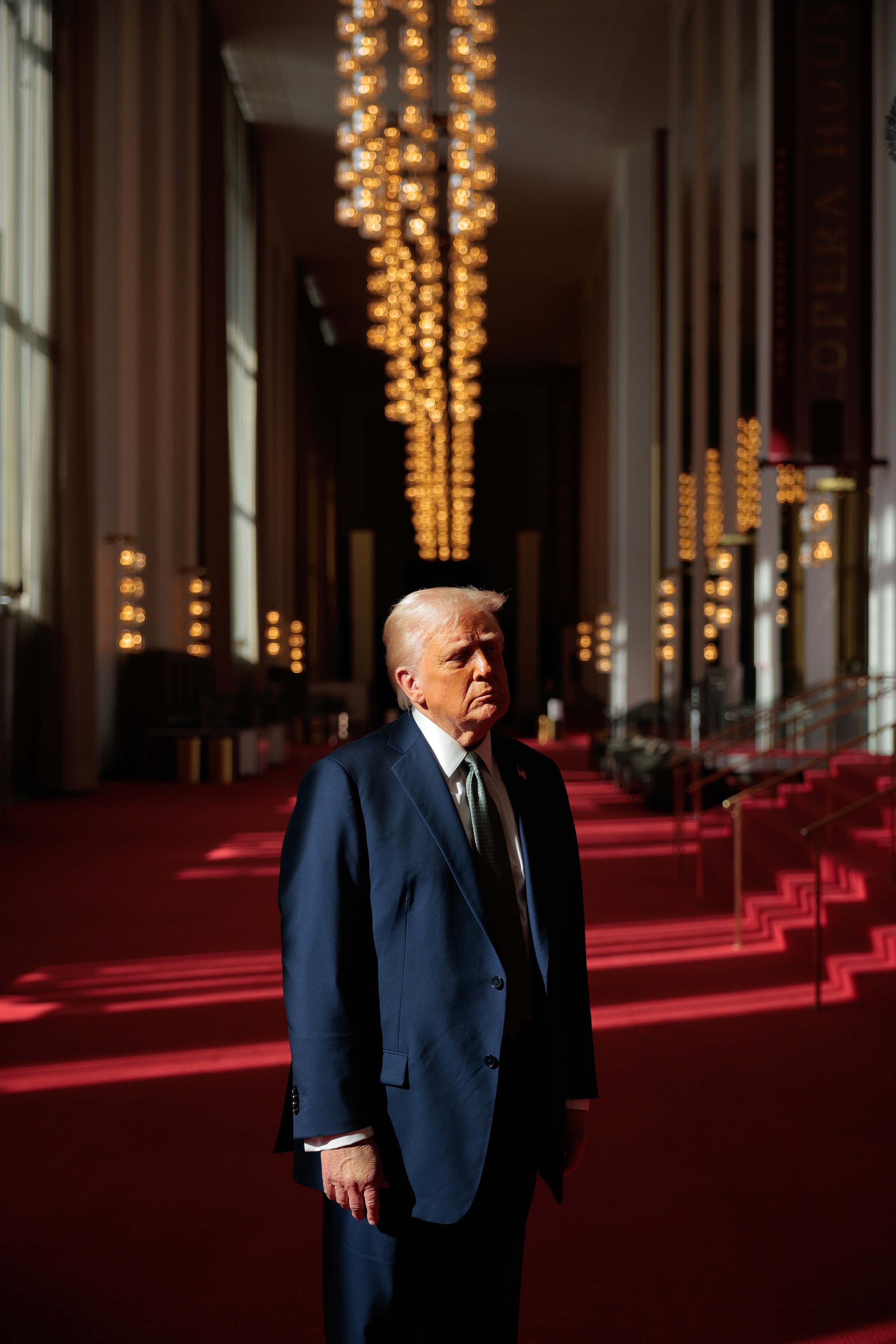
While hosting the Honors ceremony, Trump floated the idea of renaming the venue "the Trump-Kennedy Center," calling the place "hot." Most of us dismissed it as a joke. My thoughts turned to Caroline Kennedy, whose daughter was gravely ill at the time. I hoped the president and his advisors would abandon such a self-aggrandizing plan. They didn't. The renaming immediately complicated our work. An artist I'd been coordinating with for an exhibition informed me they were going "in a different direction." A jazz ensemble pulled out of its New Year's Eve performance, and a New York dance company canceled two April shows marking its 40th anniversary. Grenell attacked the canceling artists as "far-left political activists" suffering from "a form of derangement syndrome."
With absent leadership, mounting artist cancellations, falling ticket sales, and dwindling resources, my projects stalled. Two former colleagues said Grenell assigned them to plan an America's Got Talent-style competition for the nation's 250th anniversary—essentially reducing the country's premier cultural institution to a community talent show. Spending priorities seemed questionable. The roof had leaked for years and the willow trees outside the Grand Foyer were visibly decaying, yet the urgent renovation work focused on adding gold gilding to the chandelier in the Opera House's presidential box.
Rumors of a possible shutdown began circulating in August. The chief financial officer, colleagues told me, proposed closing the center at the end of September, before the new fiscal year. Around the same time, I learned the center hadn't paid invoices from its fundraising postage vendor. If a closure came, it would be framed as a renovation, with blame directed at previous leadership.
Throughout the year, the Kennedy Center touted major fundraising successes even as ticket sales dropped. But Politico revealed that development efforts were in disarray, prompting the center to bring in a prominent Trump fundraiser to assist Dale, the nominal fundraising chief. Though Grenell dismissed the story as "fake news" based on "anonymous gossip and lies," it resonated with staff. The closure announcement followed shortly, then Grenell's departure. Dale and other fundraising team members were terminated the same day I was.
When Grenell told me to "get rid of" the center's permanent art collection because new art was needed for the renovated building, his casual tone shocked me. If donors wouldn't pay for removal, he said, we could auction the works or give them away. I immediately thought of the eight-foot, 3,000-pound brass bust of President Kennedy in the Grand Foyer. Created by sculptor Robert Berks, it's undoubtedly the collection's most significant piece. When I relayed the directive to another senior leader, his eyes widened. He instructed me to take no action and said his office would handle it. I can only hope the bust—and all other works—remain protected when the center closes.
In a final insult, those of us who lost our jobs would receive an additional month of severance benefits, including health coverage, only if we signed a separation agreement containing confidentiality and nondisparagement clauses. I refused because Americans deserve to know what happened to our nation's cultural center. That's why I've joined the ongoing investigation led by Senator Sheldon Whitehouse and contacted Representative Joyce Beatty's legal team to provide information for her lawsuit challenging the renaming. Congress must establish safeguards to prevent future hostile political takeovers of the Kennedy Center. I hope more former colleagues will speak out, even anonymously.