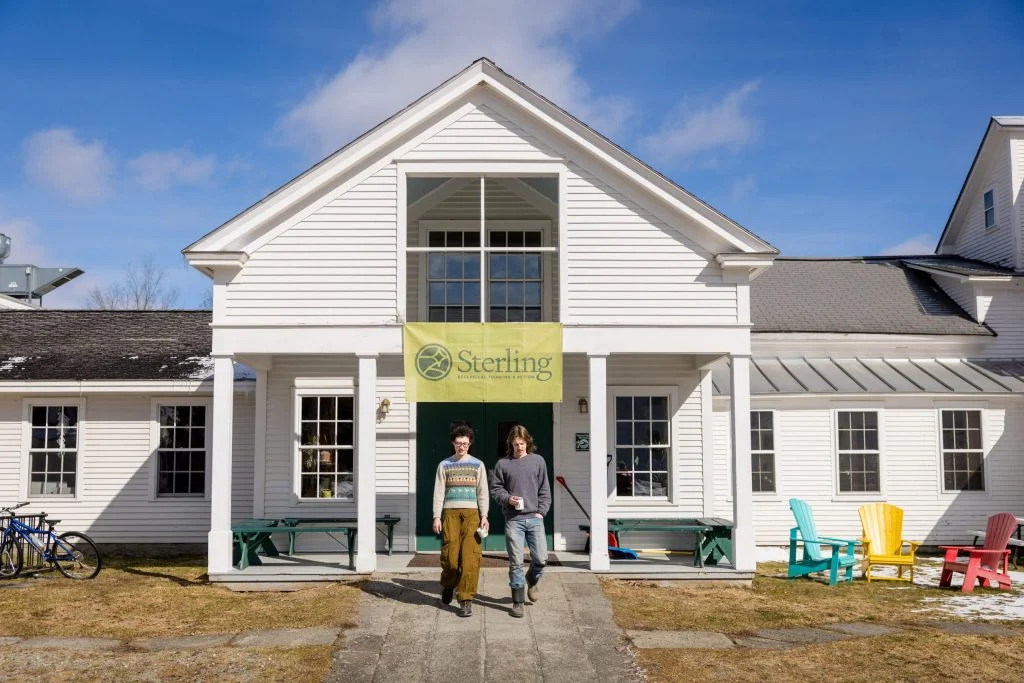
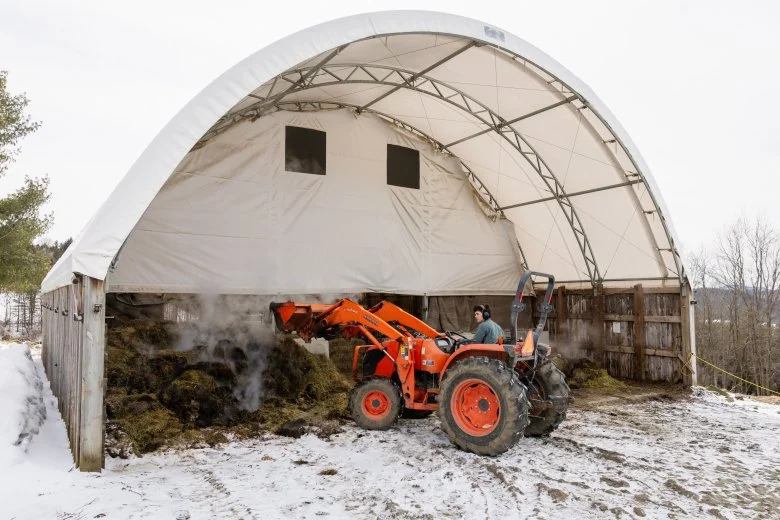
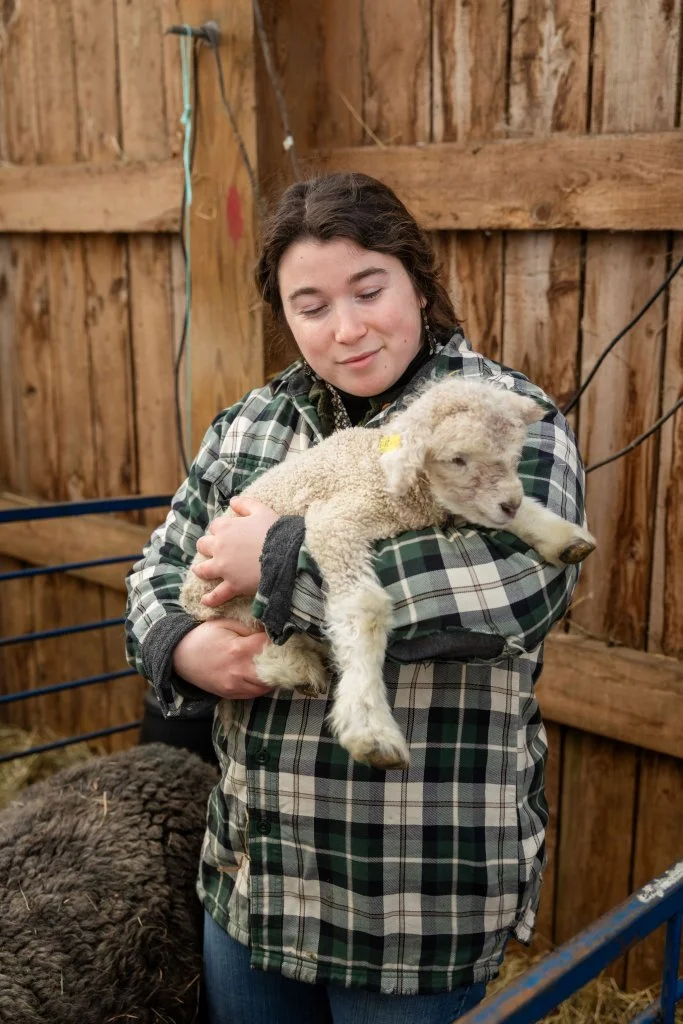
CRAFTSBURY COMMON, Vt. — Newborn lambs frolic in a fenced yard under the watchful eyes of their mothers and a rotating crew of student caretakers. The successful births offer a rare moment of joy at Sterling College, where a 130-acre working farm serves as the classroom for agriculture and related programs in a corner of northeastern Vermont so remote that cell service doesn't reach and passing cars are a novelty.
Senior LillyAnne Keeley appreciates the isolation. Standing in the barn during her lamb-watching shift, she reflects on the landscape. "We have a beautiful view. There are beautiful sunsets here. I kind of take it for granted every day."
That sense of taking things for granted evaporated when Sterling announced it would shut down at the end of the semester.
The college's closure is part of a broader crisis in American higher education. A new analysis by Huron Consulting Group projects that 442 of the nation's 1,700 private, nonprofit four-year institutions — enrolling a combined 670,000 students — face closure or forced merger within the next decade.
More than 120 schools are at the highest risk, according to Huron's forecast, which examined enrollment patterns, tuition revenue, institutional assets, debt levels and cash reserves. Many of the most vulnerable institutions share Sterling's profile: small, rural and financially strained.
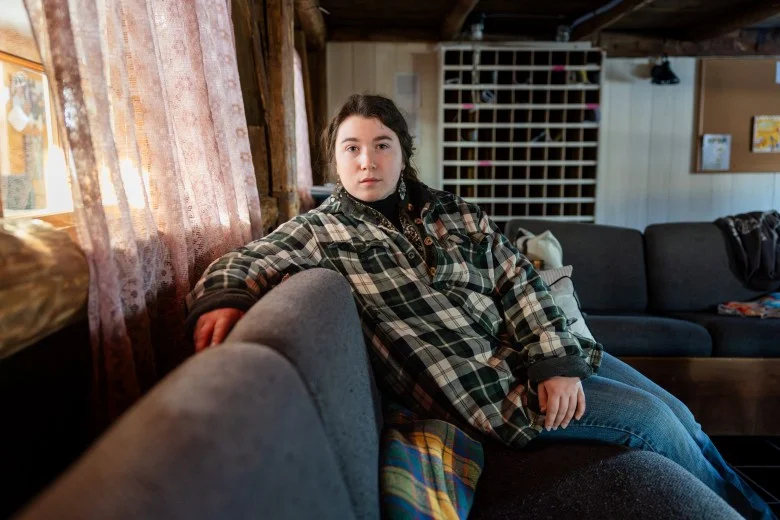
"Now that this might be gone, I just really worry about some students out there that are going to have less and less choices," Keeley said.
The scale of this crisis has been obscured by political battles and culture-war rhetoric around higher education. But the underlying cause is straightforward: a prolonged decline in college enrollment has created a fundamental mismatch between supply and demand.
"We have too many seats. We have too many classrooms," said Peter Stokes, a managing director at Huron. "So over the coming five to 10 years, this shakeout is going to take place."
Sterling — the seventh private college in Vermont to close since 2016 — provides an unusual window into the human cost of these closures. Unlike many institutions that have locked their doors with little warning, Sterling gave students a final semester to either complete their degrees or arrange transfers.

Related: Interested in innovations in higher education? Subscribe to our free biweekly higher education newsletter.
The consequences for displaced students are severe. Fewer than half of students affected by college closures continue their education, according to research from the State Higher Education Executive Officers Association. Among those who do transfer, many lose credits they've already earned and paid for. Fewer than half ultimately complete a degree.
Twenty-year-old Izzy Johnson has experienced this disruption twice. The college he planned to attend closed the month before his high school graduation. He enrolled at Sterling that fall — only to learn it, too, would shut down.

"Uprooting your entire life and starting over somewhere new—it's exhausting," Johnson said, now facing the difficult decision of where to transfer.
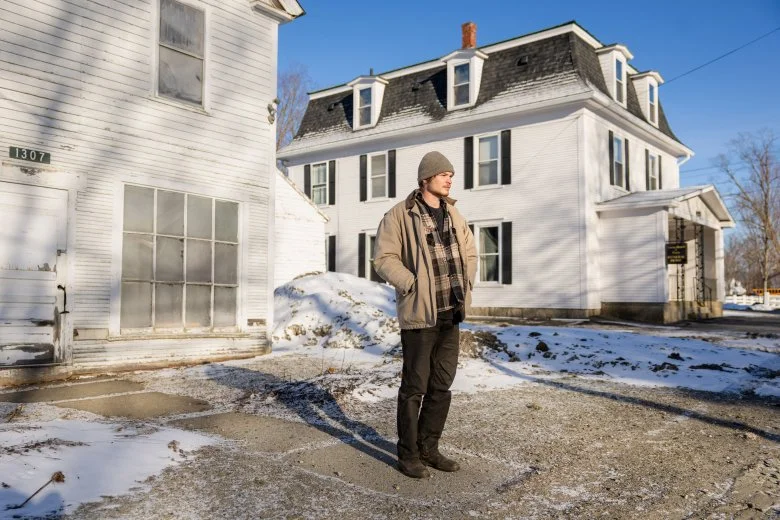
Founded in 1958 as a boys' preparatory school, Sterling College occupies a handful of white clapboard buildings that blend seamlessly into the surrounding farmland of Craftsbury Common, population 1,300. The remote Vermont institution never grew large—enrollment peaked at 120 students before declining to roughly 40 this year.
Even for a work college where students contribute labor on the farm, in dormitories, and in the kitchen, those numbers proved unsustainable, according to president Scott Thomas. While financial records indicate Sterling had been operating in the black, the margins were razor-thin.
Despite the impending closure, the campus atmosphere during its final semester remained remarkably positive. At a weekly community gathering, students, faculty, and staff in work boots and hiking shoes arranged tables in a circle at the dining hall's edge. The agenda covered routine matters—warnings about bears emerging from hibernation, reminders to exchange contact information before May's commencement.
"We decided we're going to make this last semester really good and end on a positive note," said Keeley, who like several classmates is accelerating coursework to graduate this spring. "I think we've managed that, but it's still heartbreaking."
Many students said Sterling's isolation and intimate scale were precisely what attracted them.
"I don't think I would have thrived at a large, conventional college," said Jack Beatson, a first-year student from California. "Big spaces like that overwhelm me."
Samuel Stover, a senior from Connecticut whose mother also attended Sterling, added: "I have incredible mentors and instructors here. The relationships go deeper than just submitting assignments—there's real connection."

As more small colleges disappear, Keeley noted, students seeking alternatives to "the larger, impersonal model of education" have fewer options.
Related: Colleges are now closing at a pace of one a week. What happens to the students?
The closure's ripple effects extend throughout the community. Beyond the loss of jobs and student spending at Craftsbury's two cafes and two general stores, residents worry about losing a vital pipeline of young people who often remain in Vermont—the nation's third-oldest state by population—to work and launch businesses.
"It's become a running joke that Sterling kids stick around, but it's true," said Liz Chadwick, who relocated from New Jersey in 2013 to complete her bachelor's degree at Sterling and now teaches food systems there. "They put down roots. They build families here."
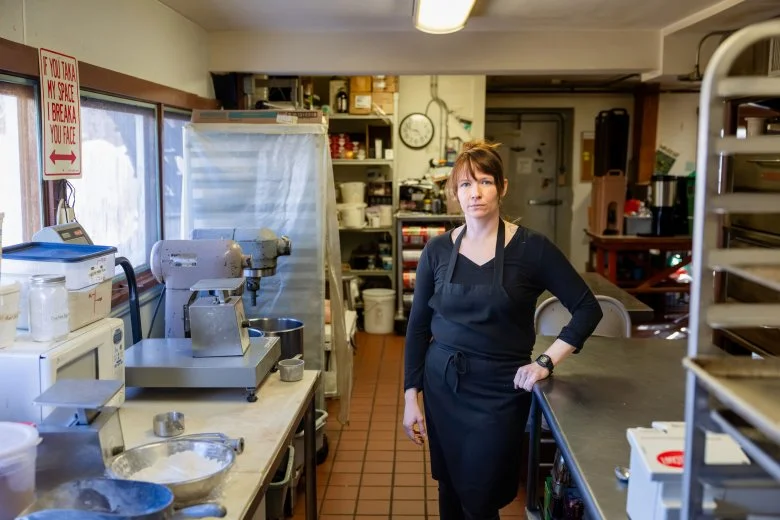
The loss of institutions like Sterling "leaves craters in small rural communities that have depended on them for decades, sometimes over a century," Thomas said.
Paul Lisai exemplifies that pattern. After graduating from Sterling, he established a dairy operation and creamery in nearby West Glover: Sweet Rowen Farmstead, named for a particularly nutritious variety of hay.
"The impact reaches far beyond local economics," said Lisai, whose milk, yogurt, and 17 cheese varieties are distributed across New England and upstate New York. "As a business owner, what worries me most is losing access to that pool of motivated, values-aligned workers." With Vermont's unemployment rate at just 2.6 percent, he added, "Finding quality employees is already a struggle."
The pressures forcing colleges and universities to the brink stem from multiple converging factors.
College enrollment has already contracted sharply, with 2.3 million fewer students enrolled today compared to 2010. The demographic outlook is equally troubling: a declining birthrate that began around that time means the pool of 18-year-olds will continue shrinking through at least 2041.
College-going rates among high school graduates have also deteriorated, dropping from 70 percent in 2016 to 61 percent in 2023. International student enrollment—a critical revenue source—faces its own crisis, with visa issuances for new international students plunging by nearly 100,000 this year, a 36 percent decline. Federal loan caps for graduate programs, set to take effect in July, threaten to further constrict another vital funding stream.
Unlike past enrollment dips or cost spikes, which institutions managed to weather, the current crisis is unprecedented in its scope. "Every major revenue stream and expense category is under pressure at the same time," warns higher education consulting firm EAB in its latest sector analysis.
The anxiety is palpable among campus leaders. Eighty-six percent of college and university presidents express concern about their institutions' long-term financial sustainability, according to the American Council on Education. One in five presidents report having serious merger discussions, per a Hanover Research and Inside Higher Ed survey.
The financial distress is becoming impossible to ignore.
Nearly one-third of private, nonprofit institutions operated at a deficit in 2024, according to Robert Kelchen, director of the Department of Educational Leadership and Policy Studies at the University of Tennessee, Knoxville. A separate analysis by education consultant Steven Shulman found that more than a third of 44 small New England colleges are depleting their operating reserves.
Related: Losing faith: Rural, religious campuses are among the most endangered
Large, well-resourced universities aren't immune either.
The University of Southern California issued pink slips to more than 900 employees. Stanford eliminated at least 363 positions. Northwestern University cut 425 jobs. DePaul University laid off 114 staff members and shuttered its art museum, citing plummeting international graduate enrollment, escalating benefit costs, and surging financial aid demands.
George Washington University sold its Virginia Science and Technology Campus in March for what the student newspaper reported was $427 million, part of what the president described as a "broader strategy to strengthen GW's long-term financial health."
The New School in New York announced a 20 percent workforce reduction. Rider University in New Jersey agreed in February to sell a fifth of its campus and lease back some facilities to generate the roughly $10 million needed to avoid financial collapse.
Public institutions face mounting financial pressures as well, according to bond-rating agency Fitch, which points to slowing economic growth and federal policy shifts. Cuts to Medicaid and SNAP will force states to redirect funds, creating what SHEEO describes as a bleak funding outlook for public higher education.
"We are seeing state funding pressure now in a way that we wouldn't have expected perhaps five or 10 years ago," said Emily Wadhwani, senior director and sector lead for education and nonprofits at Fitch. "We are seeing federal funding pressure now in a way that we would not have expected a few years ago."
Related: 'Easy to just write us off': Rural students' choices shrink as colleges slash majors
Community colleges—which serve nearly 5.6 million students—are experiencing severe financial constraints that limit their ability to innovate or adapt, according to Daniel Greenstein, former chancellor of the Pennsylvania State System of Higher Education.
"The risk is not a sudden collapse of the sector," Greenstein wrote. "The risk is a slow erosion of capacity in precisely the institutions on which communities rely most."
Yet after 25 years of tuition increases that have outpaced inflation by more than 40 percent—for returns that consumers increasingly question—higher education receives little public sympathy. Years of political attacks on campus ideology have further eroded support.
"Free market wins!" wrote one social media commenter responding to Sterling College's closure announcement. "They woked themselves right out of business," another added. A third chimed in: "Now where will they teach all the 20 year olds to protest and whine?"
Sterling's students, however, express something increasingly rare in higher education: genuine appreciation.
"I'm so glad I got to spend at least a year here," said first-year student Jack Beatson. "Just feeling like you're really part of something, and other people depend on you—that's very important to young people especially, and today especially."
Beatson is transferring to another small college in upstate New York. But the impact of Sterling will endure, he said: "We'll all take this place with us, wherever we end up."
Contact writer Jon Marcus at 212-678-7556, [email protected] or jpm.82 on Signal.
This story about colleges closing was produced by The Hechinger Report, a nonprofit, independent news organization focused on inequality and innovation in education. Sign up for our higher education newsletter.
The post More than a quarter of private colleges are at risk of closing, new projection shows appeared first on The Hechinger Report.